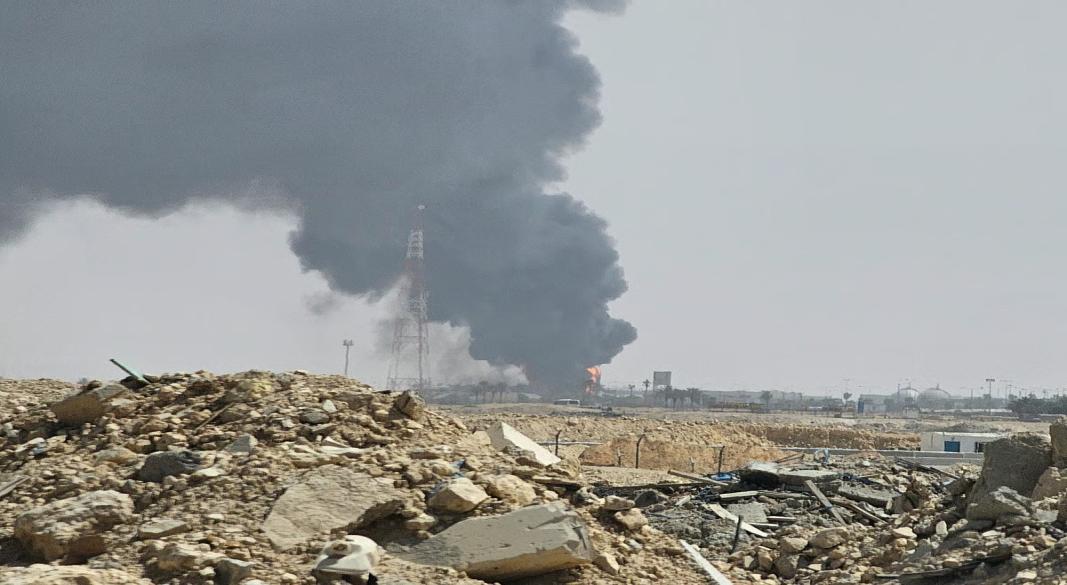
Ten flights scheduled to operate from Dhaka to Riyadh have been cancelled after a Houthi attack disrupted operations at King Khalid International Airport in Saudi Arabia. The cancellations have affected 3,431 passengers.
The Civil Aviation Authority of Bangladesh (CAAB) confirmed the updated figures on Monday morning, reporting an increase from the eight cancellations recorded on Sunday.
Among the cancelled services, Biman Bangladesh Airlines and US-Bangla Airlines each had two flights affected. Saudi Arabia’s Saudia cancelled three flights, while Riyadh Air also suspended three.
Biman Bangladesh Airlines had already halted flights BG 339 and BG 340 on Saturday night. In a statement issued on Sunday, the national carrier said passengers would receive updated schedules for the two services at noon on Monday.
The disruption began after Saturday night’s attack on Riyadh’s international airport, which led to a suspension of airport operations and interrupted air travel between Dhaka and the Saudi capital.
On Sunday, eight cancelled flights had left 2,951 passengers affected. The latest CAAB update brought the total to 10 flights and 3,431 passengers.
The situation has also created uncertainty for other scheduled services. Flight-tracking platform Flightradar24 reported that flights heading to Riyadh had been diverted or cancelled.
According to Reuters, the suspension followed attacks and explosions at the airport. Passengers have been advised to contact their airlines and verify flight schedules before heading to the airport.
Global stock markets remained mixed today as investors weighed fresh U.S. inflation data, corporate earnings reports, and the ongoing economic uncertainty in China and Europe. The U.S. stock market opened slightly higher on Monday morning, with the Dow Jones Industrial Average rising 0.4%, the S&P 500 climbing 0.3%, and the Nasdaq Composite gaining 0.5% in early trading. Investors responded positively to June's U.S. Consumer Price Index (CPI) report, which showed inflation cooling slightly to an annual rate of 3.0%, down from 3.3% in May."Markets are optimistic that the Federal Reserve may pause or even cut interest rates by the fall," said Lisa Raymond, chief analyst at Morgan & Co. "But it's still a wait-and-see situation, especially with more earnings coming this week." Wall Street Opens Higher Dow +0.4%, S&P 500 +0.3%, Nasdaq +0.5% on Monday morning. Boosted by June CPI showing inflation cooled to 3.0% (down from 3.3%). Hopes rise for potential Fed rate cut or pause by fall. The U.S. stock market opened slightly higher on Monday morning, with the Dow Jones Industrial Average rising 0.4%, the S&P 500 climbing 0.3%, and the Nasdaq Composite gaining 0.5% in early trading. Investors responded positively to June's U.S. Consumer Price Index (CPI) report, which showed inflation cooling slightly to an annual rate of 3.0%, down from 3.3% in May. "Markets are optimistic that the Federal Reserve may pause or even cut interest rates by the fall," said Lisa Raymond, chief analyst at Morgan & Co. "But it's still a wait-and-see situation, especially with more earnings coming this week." Tech Leads the Way Technology stocks led the gains in the U.S., with Apple (AAPL) up 1.8% and Nvidia (NVDA) jumping 2.4%, as demand for AI and semiconductors remains strong. Tesla (TSLA) also rebounded, rising 3.1% after announcing better-than-expected Q2 vehicle deliveries. Global stock markets showed a mixed performance as investors weighed persistent inflation concerns against a wave of corporate earnings reports. While strong results from major tech companies helped lift some indexes, uncertainty surrounding central bank policies and the future path of interest rates kept others in check. In the U.S., Europe Struggles on Growth Concerns Meanwhile, European markets showed little movement, with the FTSE 100 in London flat and Germany’s DAX down 0.2%. Investors remain concerned about weak industrial output and rising energy costs across the Eurozone.“The European economy is showing signs of fatigue,” said Carla Dupont, economist at BNP Paribas. “High borrowing costs and geopolitical tensions are dragging down business activity.”Global stock markets showed a mixed performance as investors weighed persistent inflation concerns against a wave of corporate earnings reports. While strong results from major tech companies helped lift some indexes, uncertainty surrounding central bank policies and the future path of interest rates kept others in check. In the U.S., Market Performance Summary Table Region Index/Company Movement (%) Key Driver USA Dow Jones +0.4% Positive CPI report (3.0% inflation) S&P 500 +0.3% Rate cut optimism Nasdaq +0.5% Tech stock gains Apple (AAPL) +1.8% Strong AI demand Nvidia (NVDA) +2.4% Semiconductor growth Tesla (TSLA) +3.1% Strong Q2 deliveries Europe FTSE 100 (UK) 0.0% Flat due to economic uncertainty DAX (Germany) -0.2% Weak industrial output, high energy costs Asia Nikkei 225 (Japan) +0.6% Strong export performance Shanghai Composite -1.2% Property sector risks, low consumer spending Asia Mixed as Chinese Markets Slump In Asia, markets showed mixed results. Japan’s Nikkei 225 gained 0.6%, supported by strong export data. However, Chinese markets fell sharply, with the Shanghai Composite down 1.2%, as fears about the country’s property sector and sluggish consumer spending persisted. Gains in consumer and tech sectors pushed markets higher, but weaker-than-expected bank earnings and inflation-related jitters limited broader momentum. European markets edged lower as traders grew cautious about global trade tensions and slowing growth indicators, while Asian markets saw mixed results, with Hong Kong posting modest gains and Tokyo slipping slightly. Overall, market sentiment remains cautious as investors await further economic data and guidance from central banks. Looking Ahead Investors are now turning their focus to key corporate earnings this week from major banks like JPMorgan Chase, Goldman Sachs, and Citigroup, as well as tech giants like Netflix and Microsoft. The results are expected to provide a clearer picture of business resilience amid high interest rates and uncertain global demand. Overall, market sentiment remains cautious as investors await further economic data and guidance from central banks.
The U.S. Supreme Court issued a landmark ruling on Monday, declaring that former presidents are entitled to partial immunity from criminal prosecution for actions taken while in office. The 6-3 decision, split along ideological lines, has triggered intense political and legal debate across the country.The ruling stems from charges brought against former President Donald Trump, who has faced multiple indictments related to alleged interference in the 2020 presidential election and events surrounding the January 6 Capitol riot. The Court’s decision now makes it more difficult for prosecutors to pursue charges for actions deemed as part of a president's official duties. Divided Reactions President Joe Biden responded to the ruling by calling it a “dangerous precedent” that could place future presidents above the law. “No one in America should be beyond accountability,” he said during a press conference.Republican leaders, however, welcomed the decision. House Speaker Steve Scalise stated, “This ruling upholds the constitutional separation of powers and protects the office of the presidency from political attacks.”The recent Supreme Court ruling on presidential immunity has ignited intense debate across the United States, with sharp divisions emerging among legal experts, lawmakers, and the public. The decision, which sets new boundaries on the legal protections afforded to sitting presidents, has far-reaching implications for the balance of power and accountability in government. Supporters argue that the ruling upholds the integrity of the executive office by protecting it from politically motivated prosecutions, while critics warn that it could open the door to unchecked presidential authority. What the Ruling Means The Court ruled that while presidents do not have absolute immunity, they are shielded from criminal prosecution for actions that are “within the outer perimeter of official presidential responsibilities.” However, personal or unofficial actions remain subject to prosecution.Legal experts say the ruling could delay several of Trump’s ongoing legal cases, potentially impacting the 2024 election season, where Trump remains the leading Republican contender. As protests, press conferences, and panel discussions erupt nationwide, the ruling is expected to influence upcoming elections and reshape the legal landscape surrounding executive power for years to come. Public Response The recent Supreme Court ruling on presidential immunity has ignited intense debate across the United States, with sharp divisions emerging among legal experts, lawmakers, and the public. The decision, which sets new boundaries on the legal protections afforded to sitting presidents, has far-reaching implications for the balance of power and accountability in government. Supporters argue that the ruling upholds the integrity of the executive office by protecting it from politically motivated prosecutions, while critics warn that it could open the door to unchecked presidential authority. As protests, press conferences, and panel discussions erupt nationwide, the ruling is expected to influence upcoming elections and reshape the legal landscape surrounding executive power for years to come.
The United States has long been known as a nation of immigrants and diversity. Over the last century, significant demographic changes have occurred due to immigration patterns, birth rates, cultural shifts, and changing social values. This report outlines how the racial, regional, religious, and national origin composition of the U.S. population has evolved — and where it’s heading. Table 1: U.S. Population by Race/Ethnicity (1960–2024) Year White (Non-Hispanic) Black Hispanic/Latino Asian Native American Multiracial Other 1960 85% 10.5% 3.5% 0.5% 0.3% — 0.2% 1980 80% 11.5% 6.4% 1.5% 0.6% — 0.3% 2000 69% 12.3% 12.5% 3.6% 0.9% 2.4% 0.3% 2020 59.3% 13.4% 18.5% 5.9% 1.3% 2.8% 0.1% 2024* 57.1% 13.2% 19.1% 6.5% 1.4% 3.1% 0.2% Over the last six decades, the regional distribution of the U.S. population has undergone a substantial transformation. Economic shifts, climate preferences, and immigration patterns have contributed to the steady rise of the South and West as the primary hubs of growth, while the Northeast and Midwest have seen their shares of the national population gradually decline. The United States Census Bureau divides the country into four main regions: Northeast, Midwest, South, and West. Over the past several decades, regional population distribution has shifted significantly due to migration trends, job availability, climate preferences, and immigration. Table 2: Regional Population Distribution (by U.S. Census Regions) Region 1960 1980 2000 2020 2024 (Est.) Northeast 25% 22% 19% 17% 16.5% Midwest 29% 27% 23% 20% 19.7% South 31% 34% 36% 38% 39.2% West 15% 17% 22% 25% 24.6% Key Takeaway: The South and West have seen consistent growth due to warmer climates, job markets, and immigration hubs (e.g., Texas, Florida, California). The religious landscape of the United States has undergone a dramatic transformation over the past 70 years. While the country once identified overwhelmingly as Christian — particularly Protestant — more Americans today are choosing no religious affiliation, a trend that reflects shifting cultural norms, generational change, and growing diversity. Demography by religion Religion 1950 1980 2000 2020 2024 (Est.) Protestant 69% 56% 51% 40% 39% Catholic 25% 27% 24% 21% 20% Jewish 3% 2.5% 2% 1.8% 1.8% Muslim <0.1% 0.5% 1% 1.3% 1.5% Hindu/Buddhist <0.1% 0.5% 1.5% 2% 2.2% Unaffiliated 2% 7% 15% 27% 29% Key Shift: The rise of the “nones” (religiously unaffiliated) is among the most dramatic religious shifts in recent history. Immigration has always been a cornerstone of the American story. But over the past 60 years, the origins of the U.S. foreign-born population have changed dramatically — shifting from a Europe-dominated pattern to one led by Latin America, Asia, and more recently, Africa. These demographic transformations reflect both global trends and U.S. immigration policy reforms. Summary Insights Racial Diversity Growing Rapidly: Non-Hispanic Whites are no longer a supermajority. By 2045, the U.S. is projected to be “minority-majority.” Regional Power Shift: The South and West are economic and population growth engines. Religious Landscape is Secularizing: Protestants and Catholics are declining; the religiously unaffiliated are growing fastest. Immigration Patterns Have Shifted: From European-dominated to Latin American and Asian-majority since 1965’s Immigration and Nationality Act.
Iran and Israel traded further air attacks on Thursday as President Donald Trump kept the world guessing about whether the United States would join Israel's bombardment of Iranian nuclear facilities. Google News LinkFor all latest news, follow The Daily Star's Google News channel. A week of Israeli air and missile strikes against its major rival has wiped out the top echelon of Iran's military command, damaged its nuclear capabilities and killed hundreds of people, while Iranian retaliatory strikes have killed two dozen civilians in Israel. Iran and Israel traded further air attacks on Thursday as President Donald Trump kept the world guessing about whether the United States would join Israel's bombardment of Iranian nuclear facilities. Guardian council warns US of 'harsh response A key Iranian body warned the United States on Thursday that any intervention in support of its ally Israel would be met with a "harsh response". "The criminal American government and its stupid president must know for sure that if they make a mistake and take action against Islamic Iran, they will face a harsh response from the Islamic Republic of Iran," the Guardian Council said in a statement carried by state television. Google News LinkFor all latest news, follow The Daily Star's Google News channel. A week of Israeli air and missile strikes against its major rival has wiped out the top echelon of Iran's military command, damaged its nuclear capabilities and killed hundreds of people, while Iranian retaliatory strikes have killed two dozen civilians in Israel. Guardian council warns US of 'harsh response' if it intervenes. A key Iranian body warned the United States on Thursday that any intervention in support of its ally Israel would be met with a "harsh response". "The criminal American government and its stupid president must know for sure that if they make a mistake and take action against Islamic Iran, they will face a harsh response from the Islamic Republic of Iran," the Guardian Council said in a statement carried by state television.
The U.S. Supreme Court issued a landmark ruling on Monday, declaring that former presidents are entitled to partial immunity from criminal prosecution for actions taken while in office. The 6-3 decision, split along ideological lines, has triggered intense political and legal debate across the country. The ruling stems from charges brought against former President Donald Trump, who has faced multiple indictments related to alleged interference in the 2020 presidential election and events surrounding the January 6 Capitol riot. The Court’s decision now makes it more difficult for prosecutors to pursue charges for actions deemed as part of a president's official duties. Heatwave Grips U.S. South and Midwest, Breaking Temperature Records Data Table Price Total 1200 1200 Ata Moyda Demographic Data District Population Percentage Noakhali 31,000,00 5% Cumilla 35,000,00 5.5% Divided Reactions President Joe Biden responded to the ruling by calling it a “dangerous precedent” that could place future presidents above the law. “No one in America should be beyond accountability,” he said during a press conference. Republican leaders, however, welcomed the decision. House Speaker Steve Scalise stated, “This ruling upholds the constitutional separation of powers and protects the office of the presidency from political attacks.” What the Ruling Means The Court ruled that while presidents do not have absolute immunity, they are shielded from criminal prosecution for actions that are “within the outer perimeter of official presidential responsibilities.” However, personal or unofficial actions remain subject to prosecution. Legal experts say the ruling could delay several of Trump’s ongoing legal cases, potentially impacting the 2024 election season, where Trump remains the leading Republican contender. Public Response Protests erupted in major cities including New York, Los Angeles, and Chicago, with citizens expressing fears that the decision could weaken American democracy. On social media, the hashtag #NoOneAboveTheLaw trended nationwide.


Ten flights scheduled to operate from Dhaka to Riyadh have been cancelled after a Houthi attack disrupted operations at King Khalid International Airport in Saudi Arabia. The cancellations have affected 3,431 passengers. The Civil Aviation Authority of Bangladesh (CAAB) confirmed the updated figures on Monday morning, reporting an increase from the eight cancellations recorded on Sunday. Among the cancelled services, Biman Bangladesh Airlines and US-Bangla Airlines each had two flights affected. Saudi Arabia’s Saudia cancelled three flights, while Riyadh Air also suspended three. Biman Bangladesh Airlines had already halted flights BG 339 and BG 340 on Saturday night. In a statement issued on Sunday, the national carrier said passengers would receive updated schedules for the two services at noon on Monday. The disruption began after Saturday night’s attack on Riyadh’s international airport, which led to a suspension of airport operations and interrupted air travel between Dhaka and the Saudi capital. On Sunday, eight cancelled flights had left 2,951 passengers affected. The latest CAAB update brought the total to 10 flights and 3,431 passengers. The situation has also created uncertainty for other scheduled services. Flight-tracking platform Flightradar24 reported that flights heading to Riyadh had been diverted or cancelled. According to Reuters, the suspension followed attacks and explosions at the airport. Passengers have been advised to contact their airlines and verify flight schedules before heading to the airport.




Thailand’s Supreme Administrative Court has ruled that former Prime Minister Yingluck Shinawatra must pay over 10 billion baht (approx. $305 million) in compensation for losses linked to her administration’s controversial rice pledging scheme—marking a major legal setback for the exiled leader and a defining moment in the long-running rice subsidy scandal. CNA + 4 nationthailand + 4 ABC News + 4 Wikipedia + 13 Reuters + 13 nationthailand + 13 What the Court Found The court partially overturned a previous verdict that had cleared Yingluck. It determined she had acted with “gross negligence”, particularly by ignoring repeated warnings issued by agencies such as the National Anti‑Corruption Commission and the State Audit Office about fraudulent G‑to‑G rice sales contracts. Reddit+3nationthailand+3nationthailand+3 Although the Finance Ministry initially demanded 35.7 billion baht ($1.1 billion), the court found that amount unjustifiably high. Instead, it ruled she should only pay half of the estimated damages, totalling ~20 billion baht, resulting in a more modest payout of 10.028 billion baht. ABC News+4nationthailand+4朝日新聞+4 The Failed Rice Pledging Program Yingluck’s flagship policy—introduced in 2011—pledged to buy rice from farmers at prices roughly 50% above world market value, inflating costs and encouraging massive stockpiling. When global prices plunged due to competition from India and Vietnam, Thailand lost its position as a top exporter and was left with unsold, deteriorating rice, resulting in estimated losses of up to 170 billion baht (~$19 billion). Bangkok Wikipedia +8 AP News +8 Yingluck’s Response & Next Steps From exile, Yingluck called the ruling unjust, maintaining she was being held liable “for a debt I did not cause”, emphasising her lack of direct involvement in operational decisions. Her legal team has vowed to appeal, citing past recovery of losses through rice sales and government funds used to offset the costs. nationthailand+11nationthailand+11AP News+11 Wider Implications This ruling has significant political resonance as the Pheu Thai Party, founded by her brother Thaksin Shinawatra, returns to power with his daughter Paetongtarn Shinawatra serving as prime minister. The decision underscores continuing tensions between the Shinawatra political network and conservative or military-aligned institutions. AP News+7 Reuters+7www.ndtv.com+7 At a Glance Item Details Court Supreme Administrative Court, Thailand Date of Ruling May 22, 2025 Original Compensation Order 35.7 billion baht Court-Imposed Payment ~10.028 billion baht (about $305 million) Reason for Liability Severe negligence concerning G‑to‑G rice deals Yingluck’s Status Exiled in self-imposed exile since 2017 Defense Stance Claims no direct responsibility; political targeting In Summary The Thai court has ordered Yingluck Shinawatra to pay over 10 billion baht in damages for losses from a failed rice pledging program. The ruling overturns a 2021 acquittal and slashes the original demanded amount from 35.7 billion to 10 billion baht, reflecting only half the assessed losses. Yingluck rejects the verdict as politically motivated, while her legal team prepares to appeal based on losses already recouped and lack of direct operational control.



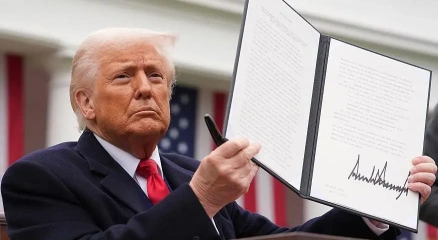
BANGKOK, July 20, 2025 — Southeast Asian leaders are preparing to issue a stern warning over the impact of U.S. President Donald Trump’s aggressive trade policies when they gather for a high-level summit on Monday. According to a leaked draft statement obtained by Agence France-Presse (AFP), the 10-member Association of Southeast Asian Nations (ASEAN) is expected to express “deep concern” over the “unilateral and protectionist measures” introduced by Washington in recent months.These measures, particularly President Trump's sweeping tariff increases on goods from major trading partners, have rattled global financial markets and disrupted international commerce. ASEAN leaders fear the escalating trade war could deliver a severe blow to their trade-dependent economies, which are already grappling with post-pandemic recovery challenges, inflationary pressure, and supply chain disruptions. Economic Growth Threat “We view the current trade tensions and unilateral tariff actions as significant threats to the region’s economic stability, growth potential, and the rules-based global trading system,” the draft communique reads.The communique reflects rising anxiety across Southeast Asia, where economies like Vietnam, Thailand, Malaysia, and Singapore depend heavily on exports to the United States and China. Leaders fear that continuing trade turbulence could derail growth forecasts and trigger investor uncertainty across the region. Chart: Key ASEAN Export Dependence (2024) Country % of Exports to US & China Combined Vietnam 42% Malaysia 38% Thailand 35% Philippines 33% Singapore 31% ASEAN ministers are expected to discuss a suite of policy responses, including: Boosting intra-ASEAN trade to reduce reliance on global giants. Diversifying trade partnerships with the EU, Japan, and South Korea. Accelerating digital trade agreements within the region. Strengthening regional supply chains for key industries. A Diplomatic Tightrope Despite the criticism aimed at Washington’s approach, ASEAN leaders are treading carefully. While the bloc wishes to uphold the multilateral trading system under the World Trade Organization (WTO), it also seeks to avoid provoking the U.S.—a critical investor and security partner in the Indo-Pacific. A senior diplomat, speaking on condition of anonymity, told reporters: “We’re not looking to pick a fight, but we must protect our interests. The global economy can’t function properly if trade rules are ignored or weaponized.” ASEAN leaders will also explore fast-tracking the implementation of the Regional Comprehensive Economic Partnership (RCEP) — the world’s largest trade deal — as a buffer against external shocks. Looking Ahead With the summit underway, much attention is focused on whether ASEAN can deliver a unified message. The bloc’s consensus-based approach often limits direct criticism, but the intensity of this year’s statement signals a growing willingness to confront challenges to global trade head-on. As President Trump continues to reshape U.S. trade policy with more unilateral moves, analysts say Southeast Asia is being forced to choose between long-standing alliances and pragmatic economic survival.