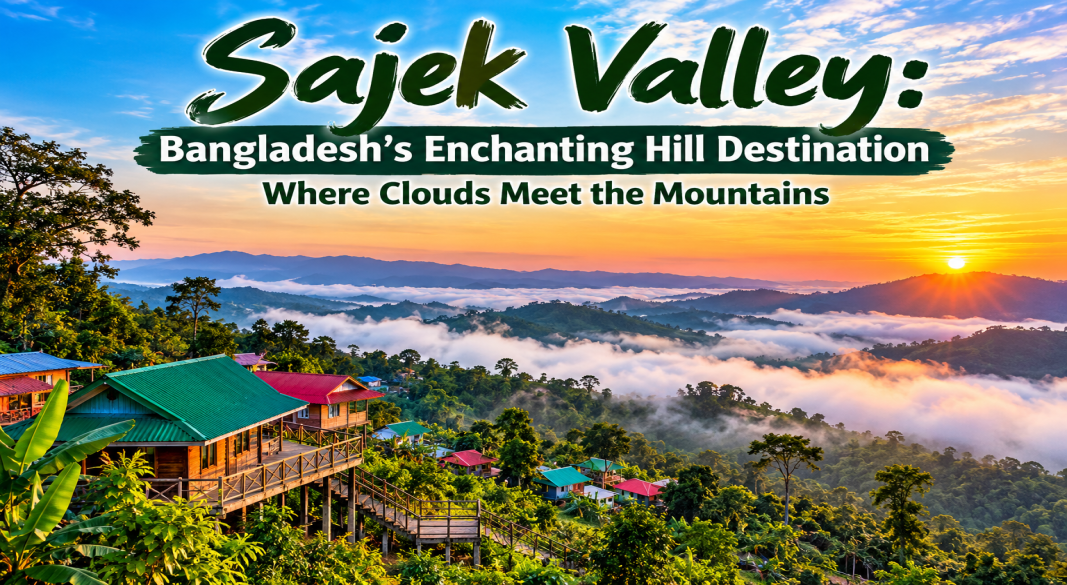
Sajek Valley, located in Sajek Union of Baghaichhari Upazila in Rangamati District, is one of Bangladesh’s most attractive nature tourism destinations. Nestled in the Kasalong mountain range at approximately 1,800 feet (550 metres) above sea level, the valley is renowned for its lush green hills, dense forests, winding mountain roads and spectacular cloud formations. Often known as the “Queen of Hills” and the “Land of Clouds,” Sajek offers visitors breathtaking scenery and a peaceful escape from the crowded urban environment.
One of the valley’s most remarkable features is the sea of clouds that frequently appears beneath the mountain peaks, particularly during early mornings and favourable weather conditions. The changing colours of the sky, mist-covered ridges and panoramic landscapes make Sajek a favourite destination for photographers, nature lovers and adventure seekers. Popular attractions include Konglak Hill, Sajek Helipad, Ruilui Para and Konglak Para, where visitors can enjoy mountain views, sunrise photography and opportunities to explore the surrounding villages.
Sajek is also culturally significant because the wider region is home to indigenous communities, including Chakma, Marma, Tripura, Pankho and Lushai people. Their traditional lifestyles, handicrafts, architecture and local cuisine add to the valley’s distinctive character. Visitors can learn about local traditions while supporting community businesses and respecting residents’ privacy and cultural practices.
Travellers generally reach Sajek through Khagrachhari and Dighinala before continuing along the hilly roads in local four-wheel-drive vehicles, commonly known as Chander Gari. The journey offers scenic views of forested slopes and mountain landscapes. Resorts, cottages, guesthouses and homestays provide accommodation options for different budgets, although prices can rise during weekends, holidays and peak tourist seasons. Travellers should confirm transport arrangements, accommodation costs and any security-related travel requirements before departure.
The monsoon and the months that follow are popular among visitors hoping to witness dramatic clouds and mist. However, heavy rainfall may create slippery roads, poor visibility and travel disruptions. The cooler months can provide more comfortable conditions for sightseeing, though cloud formations depend on the weather. Checking forecasts and following local authorities’ instructions can help ensure a safer journey.
Sajek Valley has become an important part of Bangladesh’s domestic tourism industry, attracting visitors with its natural beauty, cultural diversity and mountain atmosphere. As tourism continues to grow, protecting the environment, reducing plastic waste and respecting indigenous communities remain essential to preserving the area’s unique appeal. With proper planning and responsible travel, Sajek offers an unforgettable opportunity to experience one of Bangladesh’s most distinctive highland landscapes.
In an increasingly visual world, photography has evolved far beyond a hobby—it has become a powerful tool of connection, identity, and even resistance. From the alleyways of Marrakech to the streets of Tokyo, people around the globe are using photography to capture their realities, share their truths, and reimagine how we see the world. In 2025, the art of photography is no longer limited to professionals or those with expensive equipment. With powerful cameras embedded in nearly every smartphone and editing apps accessible to all, the global population has become a generation of storytellers. New Language of Expression Photography has become the most universal visual language—transcending borders, politics, and even spoken words. A single image can spark movements, ignite conversations, and bring attention to marginalized voices. From the war-torn zones of Gaza and Ukraine to peaceful protests in Europe and climate marches in South America, everyday citizens are documenting history in real time. These raw, unfiltered images often make their way to global audiences faster than traditional news media. "The smartphone is the new pen," says French photojournalist Camille Laurent. "People don’t just take photos—they share their worldviews." The Rise of Visual Identity In cities like New York, Seoul, and Berlin, photography has become deeply intertwined with personal branding. On platforms like Instagram and Threads, visuals are the currency of influence. Whether it’s fashion, travel, activism, or mental health, photography is the lens through which individuals craft and project their identity. This has also sparked a global aesthetic—where minimalist cafes in Istanbul resemble those in Paris, and sunlit "golden hour" selfies are universal. Yet within this visual sameness, cultural uniqueness is also being celebrated. Photographers are reclaiming their heritage—using traditional attire, rural landscapes, and local rituals to tell stories that challenge stereotypes and global homogenization. AI, Ethics & The Future As artificial intelligence blends with photography, questions of ethics and authenticity are surfacing. AI-generated portraits and edited realities raise concerns about truth, body image, and media manipulation. Yet, at the same time, AI tools are empowering more people to create stunning visuals without formal training—democratizing creativity in ways never imagined. "We’re entering an era where the line between photography and digital art is blurring," notes Japanese visual artist Rei Nakamura. "But the emotion behind the image still matters most." A Global Bond In refugee camps in Jordan, schoolchildren are given disposable cameras to capture their lives. In Scandinavian forests, nature photographers use drones to document wildlife. On African coastlines, photographers are preserving indigenous stories that were never written down. Despite the diversity of context, one thing is clear: photography connects humanity. It offers empathy. It builds bridges. In the words of American photographer Dorothea Lange, "Photography takes an instant out of time, altering life by holding it still." And today, more than ever, the world is watching—frame by frame.
Paris Fashion Week 2025 has concluded with a powerful message to the global fashion industry: sustainability, cultural diversity, and innovation are no longer optional but essential. This year’s event, held at the iconic Grand Palais, brought together designers, models, and fashion enthusiasts from around the world to witness a significant shift in creative direction. One of the most notable highlights of this year’s shows was the overwhelming emphasis on eco-conscious fashion. Leading brands such as Dior, Balenciaga, and Stella McCartney introduced collections made entirely from sustainable materials. Stella McCartney, known for her commitment to ethical fashion, showcased garments made from plant-based leather alternatives, recycled fabrics, and organic textiles. She remarked during her post-show conference that “sustainability is no longer just a concept; it is the future of fashion.” In addition to environmental responsibility, cultural representation was strongly present throughout the event. Designers from various regions, including Africa, South Asia, and Latin America, infused their collections with traditional elements. Indian designer Anita Kumar received widespread praise for her contemporary interpretation of the sari, incorporating digital embroidery and minimalistic draping. Nigerian label Ogechi blended bold Ankara prints with modern streetwear cuts, making a statement about heritage and identity in the modern world. Technology also played a significant role this year. Several designers experimented with smart fabrics, augmented reality (AR) experiences, and even garments that change color or shape based on environmental conditions. One of the most talked-about presentations was a 3D-printed dress that moved in sync with music, creating an immersive experience that quickly went viral on social media platforms. Inclusivity was another key theme. The runways featured models of all body types, genders, and ethnic backgrounds. Many praised this year’s fashion week for finally representing a more realistic and diverse image of beauty that resonates with audiences worldwide. Paris Fashion Week 2025 has set a new benchmark, reminding the industry that fashion is not only about aesthetics but also about responsibility, technology, and authenticity. As buyers and critics return home, the global industry is left with a clear message: the future of fashion is sustainable, inclusive, and culturally rich.
A major new international study has found a strong link between excessive screen time and mental health challenges in adolescents, including rising rates of insomnia, anxiety, and depression. The report, published by the Global Youth Wellness Foundation (GYWF), surveyed 72,000 teenagers aged 13 to 19 across 20 countries, including Bangladesh, the U.S., UK, and Japan. The study revealed that teenagers who spend more than 4 hours a day on social media or smartphones are twice as likely to report symptoms of poor sleep quality, mood swings, and lack of motivation. Digital Overload and the "Always-On" Culture "Teens today are exposed to a constant stream of notifications, comparisons, and content that overstimulates the brain," said Dr. Nafisa Chowdhury, lead researcher on the Bangladesh team. “It disrupts their sleep cycles, reduces face-to-face interactions, and fuels self-esteem issues.” Many teens reported checking their phones immediately before sleeping and even waking up at night to respond to messages or scroll through TikTok and Instagram. Mental Health Crisis in the Digital Age The study found: 34% of respondents reported signs of clinical depression 41% had trouble sleeping more than 3 nights a week 29% felt "chronically anxious" or socially disconnected Girls were more likely to report emotional distress linked to social media use In Dhaka, psychologists at private clinics say they’ve seen a threefold increase in teen patients over the past two years. What Experts Recommend Digital curfews: No screens 1 hour before bed App timers: Set daily limits for entertainment/social platforms Offline time: Encourage outdoor activities or family meals Mental health education: Include digital wellness in school curriculum Government Initiatives Underway In response to the growing concern, Bangladesh’s Ministry of Education is working with health officials to launch a "Safe Screens" campaign in schools, promoting healthy digital habits and offering workshops for both students and parents. “This is a national issue, and we must protect our next generation,” said Dr. Mostafa Kamal, advisor to the National Adolescent Health Program.
Paris Fashion Week 2025 has concluded with a powerful message to the global fashion industry: sustainability, cultural diversity, and innovation are no longer optional but essential. This year’s event, held at the iconic Grand Palais, brought together designers, models, and fashion enthusiasts from around the world to witness a significant shift in creative direction. One of the most notable highlights of this year’s shows was the overwhelming emphasis on eco-conscious fashion. Leading brands such as Dior, Balenciaga, and Stella McCartney introduced collections made entirely from sustainable materials. Stella McCartney, known for her commitment to ethical fashion, showcased garments made from plant-based leather alternatives, recycled fabrics, and organic textiles. She remarked during her post-show conference that “sustainability is no longer just a concept; it is the future of fashion.” In addition to environmental responsibility, cultural representation was strongly present throughout the event. Designers from various regions, including Africa, South Asia, and Latin America, infused their collections with traditional elements. Indian designer Anita Kumar received widespread praise for her contemporary interpretation of the sari, incorporating digital embroidery and minimalistic draping. Nigerian label Ogechi blended bold Ankara prints with modern streetwear cuts, making a statement about heritage and identity in the modern world. Technology also played a significant role this year. Several designers experimented with smart fabrics, augmented reality (AR) experiences, and even garments that change color or shape based on environmental conditions. One of the most talked-about presentations was a 3D-printed dress that moved in sync with music, creating an immersive experience that quickly went viral on social media platforms. Inclusivity was another key theme. The runways featured models of all body types, genders, and ethnic backgrounds. Many praised this year’s fashion week for finally representing a more realistic and diverse image of beauty that resonates with audiences worldwide. Paris Fashion Week 2025 has set a new benchmark, reminding the industry that fashion is not only about aesthetics but also about responsibility, technology, and authenticity. As buyers and critics return home, the global industry is left with a clear message: the future of fashion is sustainable, inclusive, and culturally rich.
Paris Fashion Week 2025 has concluded with a powerful message to the global fashion industry: sustainability, cultural diversity, and innovation are no longer optional but essential. This year’s event, held at the iconic Grand Palais, brought together designers, models, and fashion enthusiasts from around the world to witness a significant shift in creative direction. One of the most notable highlights of this year’s shows was the overwhelming emphasis on eco-conscious fashion. Leading brands such as Dior, Balenciaga, and Stella McCartney introduced collections made entirely from sustainable materials. Stella McCartney, known for her commitment to ethical fashion, showcased garments made from plant-based leather alternatives, recycled fabrics, and organic textiles. She remarked during her post-show conference that “sustainability is no longer just a concept; it is the future of fashion.” In addition to environmental responsibility, cultural representation was strongly present throughout the event. Designers from various regions, including Africa, South Asia, and Latin America, infused their collections with traditional elements. Indian designer Anita Kumar received widespread praise for her contemporary interpretation of the sari, incorporating digital embroidery and minimalistic draping. Nigerian label Ogechi blended bold Ankara prints with modern streetwear cuts, making a statement about heritage and identity in the modern world. Technology also played a significant role this year. Several designers experimented with smart fabrics, augmented reality (AR) experiences, and even garments that change color or shape based on environmental conditions. One of the most talked-about presentations was a 3D-printed dress that moved in sync with music, creating an immersive experience that quickly went viral on social media platforms. Inclusivity was another key theme. The runways featured models of all body types, genders, and ethnic backgrounds. Many praised this year’s fashion week for finally representing a more realistic and diverse image of beauty that resonates with audiences worldwide. Paris Fashion Week 2025 has set a new benchmark, reminding the industry that fashion is not only about aesthetics but also about responsibility, technology, and authenticity. As buyers and critics return home, the global industry is left with a clear message: the future of fashion is sustainable, inclusive, and culturally rich.


Sajek Valley, located in Sajek Union of Baghaichhari Upazila in Rangamati District, is one of Bangladesh’s most attractive nature tourism destinations. Nestled in the Kasalong mountain range at approximately 1,800 feet (550 metres) above sea level, the valley is renowned for its lush green hills, dense forests, winding mountain roads and spectacular cloud formations. Often known as the “Queen of Hills” and the “Land of Clouds,” Sajek offers visitors breathtaking scenery and a peaceful escape from the crowded urban environment. One of the valley’s most remarkable features is the sea of clouds that frequently appears beneath the mountain peaks, particularly during early mornings and favourable weather conditions. The changing colours of the sky, mist-covered ridges and panoramic landscapes make Sajek a favourite destination for photographers, nature lovers and adventure seekers. Popular attractions include Konglak Hill, Sajek Helipad, Ruilui Para and Konglak Para, where visitors can enjoy mountain views, sunrise photography and opportunities to explore the surrounding villages. Sajek is also culturally significant because the wider region is home to indigenous communities, including Chakma, Marma, Tripura, Pankho and Lushai people. Their traditional lifestyles, handicrafts, architecture and local cuisine add to the valley’s distinctive character. Visitors can learn about local traditions while supporting community businesses and respecting residents’ privacy and cultural practices. Travellers generally reach Sajek through Khagrachhari and Dighinala before continuing along the hilly roads in local four-wheel-drive vehicles, commonly known as Chander Gari. The journey offers scenic views of forested slopes and mountain landscapes. Resorts, cottages, guesthouses and homestays provide accommodation options for different budgets, although prices can rise during weekends, holidays and peak tourist seasons. Travellers should confirm transport arrangements, accommodation costs and any security-related travel requirements before departure. The monsoon and the months that follow are popular among visitors hoping to witness dramatic clouds and mist. However, heavy rainfall may create slippery roads, poor visibility and travel disruptions. The cooler months can provide more comfortable conditions for sightseeing, though cloud formations depend on the weather. Checking forecasts and following local authorities’ instructions can help ensure a safer journey. Sajek Valley has become an important part of Bangladesh’s domestic tourism industry, attracting visitors with its natural beauty, cultural diversity and mountain atmosphere. As tourism continues to grow, protecting the environment, reducing plastic waste and respecting indigenous communities remain essential to preserving the area’s unique appeal. With proper planning and responsible travel, Sajek offers an unforgettable opportunity to experience one of Bangladesh’s most distinctive highland landscapes.



The Great Wall of China is one of the world’s most remarkable historical structures, reflecting the architectural achievements and military strategies of ancient Chinese civilization. Stretching across mountains, valleys, deserts and vast landscapes, the wall represents centuries of construction, expansion and restoration. According to official surveys, the total length of the Great Wall system, including its various sections and associated defensive structures, is approximately 21,196 kilometres. The history of the Great Wall dates back to ancient Chinese states, which built separate defensive walls to protect their territories. During the third century BC, Emperor Qin Shi Huang initiated efforts to connect several existing fortifications. Successive dynasties continued to expand and rebuild the structure, with many of its best-preserved and most famous sections constructed during the Ming Dynasty. The primary purpose of the Great Wall was to strengthen China’s northern frontier against potential invasions. It also helped authorities monitor border movements, control important routes and communicate warnings across long distances. Built using locally available materials such as stone, brick and compacted earth, the defensive system included watchtowers, military garrisons, fortresses and signal stations. Constructing and maintaining such an extensive structure required enormous amounts of labour, resources and engineering expertise. Builders adapted their techniques to the surrounding terrain, creating fortifications that followed mountain ridges and crossed challenging landscapes. The Great Wall therefore represents not only military planning but also the organisational capabilities of successive Chinese governments. In 1987, UNESCO added the Great Wall of China to its World Heritage List in recognition of its outstanding historical and cultural significance. Today, it is one of China’s most popular tourist attractions, drawing visitors from around the world. Despite its enormous length, the wall is not easily visible to the unaided eye from space, contrary to a widely circulated misconception. Beyond its original defensive role, the Great Wall has become a lasting symbol of China’s cultural identity and architectural heritage. Its remarkable history demonstrates how generations of builders transformed a series of fortifications into one of humanity’s most extraordinary historical landmarks.




The life of Prophet Muhammad (peace be upon him) offers enduring lessons in honesty, kindness, patience and justice that continue to inspire millions of people around the world. Prophet Muhammad (peace be upon him), born in Makkah around 570 CE, is regarded by Muslims as the final prophet of Islam. His life and teachings have had a profound influence on religious beliefs, moral values and social life across generations. According to Islamic tradition, he received his first revelation at the age of 40 and began calling people to worship one God. His message emphasised compassion, honesty, helping those in need and treating others with fairness and respect. Throughout his mission, the Prophet faced opposition and hardship. Despite these challenges, accounts of his life highlight his patience, commitment to his message and concern for vulnerable members of society, including orphans, the poor and those facing injustice. In 622 CE, he migrated from Makkah to Madinah with his followers. This event, known as the Hijrah, became the starting point of the Islamic calendar. In Madinah, he helped establish a Muslim community built around religious commitment, social responsibility and cooperation. Muslims also look to his example for guidance on family life, peaceful conduct, charity and maintaining good relations with neighbours. His teachings encourage believers to speak truthfully, fulfil their responsibilities and show mercy to others. Prophet Muhammad passed away in Madinah in 632 CE. More than fourteen centuries later, his life remains central to Islamic faith and practice, while his teachings continue to shape the daily lives of Muslims worldwide.