A powerful earthquake struck southern Türkiye and northern Syria on February 6, 2023, causing catastrophic destruction and claiming more than 55,000 lives. The disaster left entire neighbourhoods in ruins, displaced millions of people and created an enormous humanitarian emergency across the region.
The first earthquake, measuring magnitude 7.8, hit in the early hours of the morning when most residents were asleep. A second major earthquake followed later that day, worsening the damage and bringing down additional buildings. Homes, hospitals, schools and essential infrastructure were severely affected, leaving many communities struggling to access basic services.
Rescue workers and volunteers rushed to search through collapsed structures for survivors. Operations were complicated by freezing weather, damaged roads and repeated aftershocks. Families waited anxiously for news of missing relatives as emergency teams worked against time to reach people trapped beneath the rubble.
The disaster hit Syria particularly hard because years of conflict had already damaged infrastructure and weakened essential public services. Across both countries, survivors faced shortages of temporary shelter, food, clean water and medical supplies.
International assistance played an important role in rescue operations and emergency relief. However, the enormous scale of the destruction made recovery a lengthy process. Rebuilding homes, restoring public services and supporting affected families required substantial resources and continued international cooperation.
The earthquake exposed serious vulnerabilities in building safety and disaster preparedness. It also demonstrated how quickly a natural disaster can overwhelm communities and emergency systems. The February 2023 tragedy remains one of the deadliest earthquakes of the 21st century, leaving a lasting impact on millions of people and serving as a powerful reminder of the importance of safer construction, effective emergency planning and rapid humanitarian assistance.
In an increasingly visual world, photography has evolved far beyond a hobby—it has become a powerful tool of connection, identity, and even resistance. From the alleyways of Marrakech to the streets of Tokyo, people around the globe are using photography to capture their realities, share their truths, and reimagine how we see the world. In 2025, the art of photography is no longer limited to professionals or those with expensive equipment. With powerful cameras embedded in nearly every smartphone and editing apps accessible to all, the global population has become a generation of storytellers. New Language of Expression Photography has become the most universal visual language—transcending borders, politics, and even spoken words. A single image can spark movements, ignite conversations, and bring attention to marginalized voices. From the war-torn zones of Gaza and Ukraine to peaceful protests in Europe and climate marches in South America, everyday citizens are documenting history in real time. These raw, unfiltered images often make their way to global audiences faster than traditional news media. "The smartphone is the new pen," says French photojournalist Camille Laurent. "People don’t just take photos—they share their worldviews." The Rise of Visual Identity In cities like New York, Seoul, and Berlin, photography has become deeply intertwined with personal branding. On platforms like Instagram and Threads, visuals are the currency of influence. Whether it’s fashion, travel, activism, or mental health, photography is the lens through which individuals craft and project their identity. This has also sparked a global aesthetic—where minimalist cafes in Istanbul resemble those in Paris, and sunlit "golden hour" selfies are universal. Yet within this visual sameness, cultural uniqueness is also being celebrated. Photographers are reclaiming their heritage—using traditional attire, rural landscapes, and local rituals to tell stories that challenge stereotypes and global homogenization. AI, Ethics & The Future As artificial intelligence blends with photography, questions of ethics and authenticity are surfacing. AI-generated portraits and edited realities raise concerns about truth, body image, and media manipulation. Yet, at the same time, AI tools are empowering more people to create stunning visuals without formal training—democratizing creativity in ways never imagined. "We’re entering an era where the line between photography and digital art is blurring," notes Japanese visual artist Rei Nakamura. "But the emotion behind the image still matters most." A Global Bond In refugee camps in Jordan, schoolchildren are given disposable cameras to capture their lives. In Scandinavian forests, nature photographers use drones to document wildlife. On African coastlines, photographers are preserving indigenous stories that were never written down. Despite the diversity of context, one thing is clear: photography connects humanity. It offers empathy. It builds bridges. In the words of American photographer Dorothea Lange, "Photography takes an instant out of time, altering life by holding it still." And today, more than ever, the world is watching—frame by frame.
A major new international study has found a strong link between excessive screen time and mental health challenges in adolescents, including rising rates of insomnia, anxiety, and depression. The report, published by the Global Youth Wellness Foundation (GYWF), surveyed 72,000 teenagers aged 13 to 19 across 20 countries, including Bangladesh, the U.S., UK, and Japan. The study revealed that teenagers who spend more than 4 hours a day on social media or smartphones are twice as likely to report symptoms of poor sleep quality, mood swings, and lack of motivation. Digital Overload and the "Always-On" Culture "Teens today are exposed to a constant stream of notifications, comparisons, and content that overstimulates the brain," said Dr. Nafisa Chowdhury, lead researcher on the Bangladesh team. “It disrupts their sleep cycles, reduces face-to-face interactions, and fuels self-esteem issues.” Many teens reported checking their phones immediately before sleeping and even waking up at night to respond to messages or scroll through TikTok and Instagram. Mental Health Crisis in the Digital Age The study found: 34% of respondents reported signs of clinical depression 41% had trouble sleeping more than 3 nights a week 29% felt "chronically anxious" or socially disconnected Girls were more likely to report emotional distress linked to social media use In Dhaka, psychologists at private clinics say they’ve seen a threefold increase in teen patients over the past two years. What Experts Recommend Digital curfews: No screens 1 hour before bed App timers: Set daily limits for entertainment/social platforms Offline time: Encourage outdoor activities or family meals Mental health education: Include digital wellness in school curriculum Government Initiatives Underway In response to the growing concern, Bangladesh’s Ministry of Education is working with health officials to launch a "Safe Screens" campaign in schools, promoting healthy digital habits and offering workshops for both students and parents. “This is a national issue, and we must protect our next generation,” said Dr. Mostafa Kamal, advisor to the National Adolescent Health Program.
Paris Fashion Week 2025 has concluded with a powerful message to the global fashion industry: sustainability, cultural diversity, and innovation are no longer optional but essential. This year’s event, held at the iconic Grand Palais, brought together designers, models, and fashion enthusiasts from around the world to witness a significant shift in creative direction. One of the most notable highlights of this year’s shows was the overwhelming emphasis on eco-conscious fashion. Leading brands such as Dior, Balenciaga, and Stella McCartney introduced collections made entirely from sustainable materials. Stella McCartney, known for her commitment to ethical fashion, showcased garments made from plant-based leather alternatives, recycled fabrics, and organic textiles. She remarked during her post-show conference that “sustainability is no longer just a concept; it is the future of fashion.” In addition to environmental responsibility, cultural representation was strongly present throughout the event. Designers from various regions, including Africa, South Asia, and Latin America, infused their collections with traditional elements. Indian designer Anita Kumar received widespread praise for her contemporary interpretation of the sari, incorporating digital embroidery and minimalistic draping. Nigerian label Ogechi blended bold Ankara prints with modern streetwear cuts, making a statement about heritage and identity in the modern world. Technology also played a significant role this year. Several designers experimented with smart fabrics, augmented reality (AR) experiences, and even garments that change color or shape based on environmental conditions. One of the most talked-about presentations was a 3D-printed dress that moved in sync with music, creating an immersive experience that quickly went viral on social media platforms. Inclusivity was another key theme. The runways featured models of all body types, genders, and ethnic backgrounds. Many praised this year’s fashion week for finally representing a more realistic and diverse image of beauty that resonates with audiences worldwide. Paris Fashion Week 2025 has set a new benchmark, reminding the industry that fashion is not only about aesthetics but also about responsibility, technology, and authenticity. As buyers and critics return home, the global industry is left with a clear message: the future of fashion is sustainable, inclusive, and culturally rich.
Paris Fashion Week 2025 has concluded with a powerful message to the global fashion industry: sustainability, cultural diversity, and innovation are no longer optional but essential. This year’s event, held at the iconic Grand Palais, brought together designers, models, and fashion enthusiasts from around the world to witness a significant shift in creative direction. One of the most notable highlights of this year’s shows was the overwhelming emphasis on eco-conscious fashion. Leading brands such as Dior, Balenciaga, and Stella McCartney introduced collections made entirely from sustainable materials. Stella McCartney, known for her commitment to ethical fashion, showcased garments made from plant-based leather alternatives, recycled fabrics, and organic textiles. She remarked during her post-show conference that “sustainability is no longer just a concept; it is the future of fashion.” In addition to environmental responsibility, cultural representation was strongly present throughout the event. Designers from various regions, including Africa, South Asia, and Latin America, infused their collections with traditional elements. Indian designer Anita Kumar received widespread praise for her contemporary interpretation of the sari, incorporating digital embroidery and minimalistic draping. Nigerian label Ogechi blended bold Ankara prints with modern streetwear cuts, making a statement about heritage and identity in the modern world. Technology also played a significant role this year. Several designers experimented with smart fabrics, augmented reality (AR) experiences, and even garments that change color or shape based on environmental conditions. One of the most talked-about presentations was a 3D-printed dress that moved in sync with music, creating an immersive experience that quickly went viral on social media platforms. Inclusivity was another key theme. The runways featured models of all body types, genders, and ethnic backgrounds. Many praised this year’s fashion week for finally representing a more realistic and diverse image of beauty that resonates with audiences worldwide. Paris Fashion Week 2025 has set a new benchmark, reminding the industry that fashion is not only about aesthetics but also about responsibility, technology, and authenticity. As buyers and critics return home, the global industry is left with a clear message: the future of fashion is sustainable, inclusive, and culturally rich.
Paris Fashion Week 2025 has concluded with a powerful message to the global fashion industry: sustainability, cultural diversity, and innovation are no longer optional but essential. This year’s event, held at the iconic Grand Palais, brought together designers, models, and fashion enthusiasts from around the world to witness a significant shift in creative direction. One of the most notable highlights of this year’s shows was the overwhelming emphasis on eco-conscious fashion. Leading brands such as Dior, Balenciaga, and Stella McCartney introduced collections made entirely from sustainable materials. Stella McCartney, known for her commitment to ethical fashion, showcased garments made from plant-based leather alternatives, recycled fabrics, and organic textiles. She remarked during her post-show conference that “sustainability is no longer just a concept; it is the future of fashion.” In addition to environmental responsibility, cultural representation was strongly present throughout the event. Designers from various regions, including Africa, South Asia, and Latin America, infused their collections with traditional elements. Indian designer Anita Kumar received widespread praise for her contemporary interpretation of the sari, incorporating digital embroidery and minimalistic draping. Nigerian label Ogechi blended bold Ankara prints with modern streetwear cuts, making a statement about heritage and identity in the modern world. Technology also played a significant role this year. Several designers experimented with smart fabrics, augmented reality (AR) experiences, and even garments that change color or shape based on environmental conditions. One of the most talked-about presentations was a 3D-printed dress that moved in sync with music, creating an immersive experience that quickly went viral on social media platforms. Inclusivity was another key theme. The runways featured models of all body types, genders, and ethnic backgrounds. Many praised this year’s fashion week for finally representing a more realistic and diverse image of beauty that resonates with audiences worldwide. Paris Fashion Week 2025 has set a new benchmark, reminding the industry that fashion is not only about aesthetics but also about responsibility, technology, and authenticity. As buyers and critics return home, the global industry is left with a clear message: the future of fashion is sustainable, inclusive, and culturally rich.



Area 51 has remained one of the world's most mysterious military installations, attracting public curiosity because of its secrecy, advanced aircraft testing and decades of UFO speculation. Hidden in a remote desert region of Nevada, the facility has become a symbol of the unknown, inspiring countless documentaries, films and conspiracy theories. The base gained particular importance during the Cold War, when the United States developed advanced reconnaissance aircraft to monitor potential threats. Aircraft programs associated with Area 51 included the U-2 spy plane and the A-12, both designed to perform intelligence missions using technology that was highly advanced for their time. Its secrecy helped fuel stories about unidentified flying objects. During the early years of high-altitude aircraft testing, some unusual sightings were reported by people who had no knowledge of the classified programs operating overhead. Over time, these incidents contributed to speculation that the government was hiding evidence of extraterrestrial visitors. Despite the popularity of these theories, no publicly verified evidence has established that Area 51 contains alien spacecraft or living extraterrestrials. The facility's documented history instead points to secret military research, aircraft development and testing. Many details about its present-day activities remain undisclosed. Today, Area 51 continues to attract researchers, aviation enthusiasts and UFO investigators from around the world. Its restricted status and limited public access ensure that interest in the installation remains strong. Although rumors continue to surround the base, its best-established legacy is its role in the development of advanced aviation technology. The enduring mystery of Area 51 illustrates how government secrecy can inspire both legitimate questions and extraordinary claims that remain unsupported by evidence.



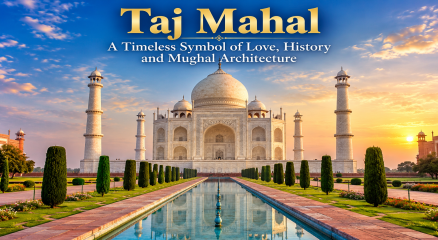
The Taj Mahal, located on the banks of the Yamuna River in Agra, Uttar Pradesh, India, is one of the world's most celebrated historical monuments. Built by Mughal Emperor Shah Jahan in memory of his beloved wife, Mumtaz Mahal, this magnificent mausoleum represents love, remembrance and artistic excellence. Construction began in 1632, and the wider architectural complex was completed around 1653. Centuries later, the monument continues to captivate visitors with its remarkable beauty and historical significance. Constructed primarily from white marble, the Taj Mahal combines influences from Persian, Indian and Islamic architectural traditions. Its magnificent central dome, four minarets, elegant arches and intricate stonework demonstrate the extraordinary craftsmanship of the Mughal period. Carefully designed gardens, water channels and surrounding structures contribute to the monument's harmonious appearance. The marble surface also reflects changing shades of light throughout the day, creating a distinctive visual experience for visitors. The Taj Mahal is more than a royal tomb; it is an important example of the Mughal Empire's architectural ambition and artistic achievements. Numerous skilled artisans, craftsmen and architects contributed to its construction. The complex includes the main mausoleum, a mosque, a guesthouse, a monumental entrance and landscaped gardens, forming an integrated architectural masterpiece. In 1983, UNESCO designated the Taj Mahal a World Heritage Site in recognition of its outstanding cultural and architectural value. It later gained further international recognition as one of the New Seven Wonders of the World. Today, it remains one of India's leading tourist attractions, drawing visitors, historians, photographers and architecture enthusiasts from across the globe. Its popularity also supports tourism, local businesses and traditional handicrafts in Agra. Despite its enduring beauty, the Taj Mahal faces conservation challenges associated with air pollution, environmental changes and the pressure of tourism. Protecting its marble surfaces, intricate decorations and original architectural features requires continued maintenance, environmental safeguards and responsible visitor management. Nearly four centuries after its construction began, the Taj Mahal remains a powerful symbol of India's cultural heritage and the artistic achievements of the Mughal era. Its extraordinary design and emotional history have secured its place among the world's most treasured monuments, inspiring generations to appreciate the lasting connection between human creativity, history and remembrance.




Shoriful Islam, the second son of Mr. Md. Oziullah of Dighir Dakshin Par, Lakshmidhar Para, has successfully completed his MBBS examinations at Chandpur Government Medical College (CHMC). His achievement has brought immense joy and pride to his family, relatives, and the local community. His dedication, perseverance, and hard work in pursuing medical education have earned him warm congratulations and heartfelt best wishes from well-wishers. Dr. Shoriful Islam’s achievement marks an important milestone in his personal and academic journey. His success is also expected to inspire the younger generation of Lakshmidhar Para to pursue their educational goals with determination and confidence. Completing medical education opens a new chapter in his professional life, offering him the opportunity to contribute to society through healthcare and humanitarian service. On this occasion, Lakshmidhar Para Unity Forum (LPUF) has extended its sincere congratulations and best wishes to Dr. Shoriful Islam. The organization has expressed its hopes for his continued success and a bright professional future. It also wishes for him to uphold the values of honesty, professional competence, dedication, and compassion as he moves forward in his medical career. Medical practice is not merely a profession; it is a noble responsibility that involves caring for people, protecting lives, and serving humanity. Dr. Shoriful Islam is expected to use his knowledge and skills to support patients, contribute to public well-being, and provide compassionate care to those in need. His well-wishers hope that he will become a responsible, skilled, and humane physician who makes a meaningful contribution to society. Lakshmidhar Para Unity Forum (LPUF) has prayed for Allah’s blessings upon Dr. Shoriful Islam, wishing him wisdom, integrity, and success throughout his career. The organization also hopes that he will have the opportunity to serve the country and its people with dedication and compassion. His achievement stands as a proud moment for his family and the community, and he is wished a bright future filled with success and meaningful service to humanity.